
Guides → Entrance, Route & Welcome
When the Walkway Points to the Garage Instead of the Front Door
Last reviewed September 10, 2026 · AI concept imagery · About 7 minutes read
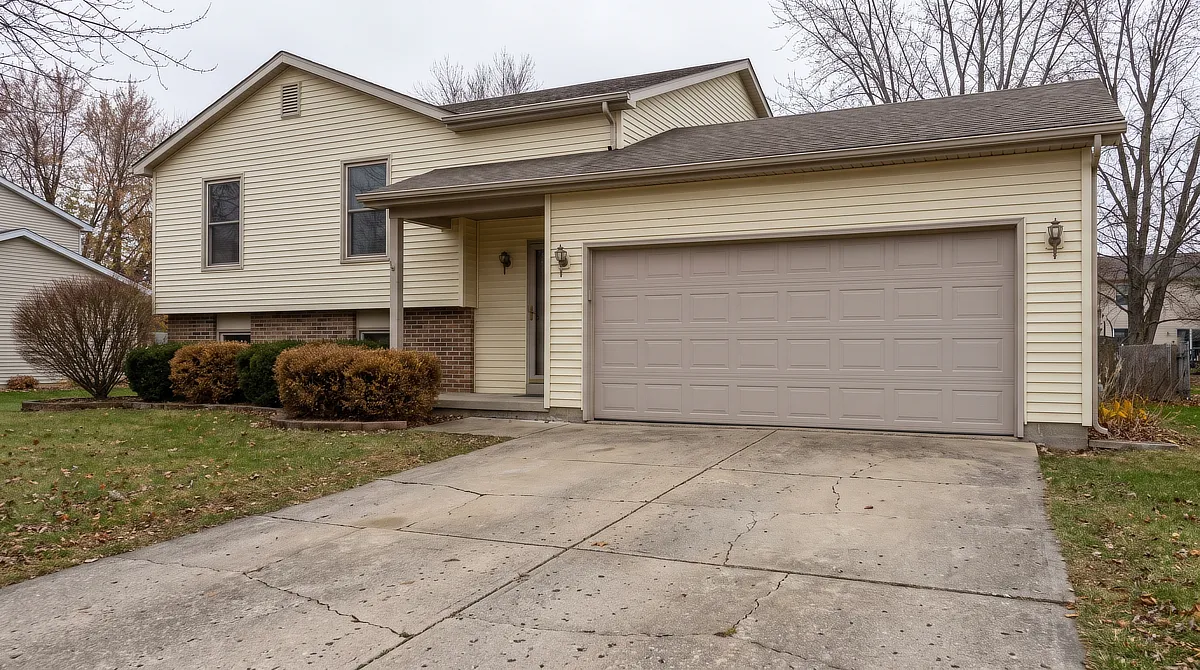
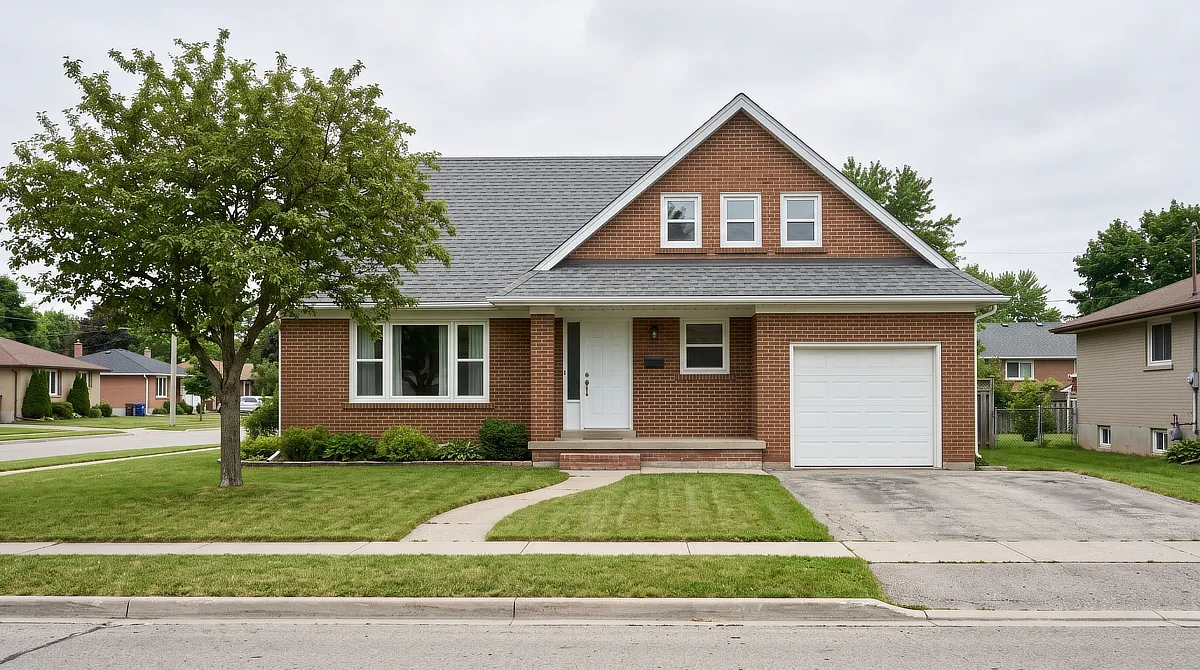
AI concept visualization for inspiration.
Maybe a visitor noticed it before you did. A friend parked, got out, stood still for a second longer than seemed necessary, then walked toward the garage. Maybe you called out and waved them over, or maybe you just watched it happen and thought about it later.
That pause is worth taking seriously. It says something about what the front of your house is telling people to do, and whether that matches what you actually want.
This guide is about reading that message before you change anything.
What You Are Actually Noticing
The visible symptom can be small and repeatable. A delivery gets left at the garage. A first-time visitor hesitates at the car and then commits to the wrong direction. Someone knocks on the side door because it was closer to where they were standing.
When this happens, the route is doing what it was laid out to do. Right now, it ends at the garage.
Two different situations can produce that same pause, and they need different responses.
In the first, there’s no pedestrian route to the front door at all. Whoever gets out of a car has to choose between walking up the driveway or crossing the lawn, so they take the driveway, because that’s the only surface offering to carry them anywhere.
In the second, there’s a route to the front door. It may be a plain concrete strip, or a short spur off the side of the driveway. The driveway next to it is wider, brighter and more continuous, and it arrives at a very large door, so the path is easy to overlook.
From inside the house, the two situations feel the same. From the curb, they’re different problems, and one of them doesn’t need new paving at all.
Why the Route Probably Ends Up This Way
One possible explanation is that the layout was settled before anyone thought about arrival as an experience.
A builder solving for a lot, a garage position, and a budget can run the shortest useful concrete from the street to the parking, then add whatever pedestrian connection the plan requires.
That kind of layout gets cars to the garage easily and leaves visitors to work out the rest. If that’s what happened on your lot, it came down to the order decisions were made in, and it doesn’t say anything about the house or the people who live in it.
There’s a second reason, and it’s easy to overlook. Your household may really arrive through the garage. If everyone who lives there parks, walks in through the interior door and rarely uses the front entrance, the route is simply showing how the house gets used every day.
Those two things pull in different directions, and the useful question sits between them: does the front of your house need to serve the people who live there, the people who visit, or both, and in what order?
A route can only give first priority to one of them, so that’s the decision to make before anything else.
What Deserves to Stay
Before anything gets removed, three things are worth defending.
- The driveway connection. If a paved link runs from the parking area toward the house, it’s carrying real weight. It keeps people off wet grass, it’s the route you use with groceries, and in winter it’s the surface that gets cleared. Treating it as clutter would ignore the way the house is actually used.
- The existing walk, even when it’s plain. Narrow builder concrete is easy to dislike and expensive to replace. It may already be in a workable place. Before deciding it’s the problem, it’s worth checking whether it’s simply under-supported: no light, no landing, nothing at either end telling you it matters. A path can be in the right place and still be hard to see, and making it easier to see can cost much less than replacing it.
- The garage as the family entrance. There’s nothing to fix here. Coming in through the garage with your hands full is sensible. The aim is simply that visitors can find the front door too, while the family keeps coming in the way it always has.
Read Your Own Arrival Before You Change Anything
Try these three reads on your own house before you decide anything. They take a few minutes, and they’ll tell you more than a list of ideas would.
- The curb read. Stand where a visitor would first see the house, roughly where a car would stop. Look at it as though you’ve never been there. How quickly can you tell where the front door is and how you’d reach it?
Ideally, a visitor can work that out in a few seconds without having to think about it. You don’t need a stopwatch, just notice whether you found the door right away or had to search for it. - The car door read. Now stand where someone actually steps out of a vehicle, not where the plan says they should. Look at what’s directly in front of you. This is the moment the decision gets made, and the paving easiest to see from that exact spot can shape it. If the front walk is behind you, around a planting bed or set back from where the car sits, a visitor may not notice it at all.
- The dark and wet read. Do both of the above again at night, and again the day after real rain. A route that reads clearly in daylight can disappear after dark, and if a path holds water or ices over, visitors are likely to pick the dry driveway instead, however the path is landscaped.
If water regularly crosses the route, that’s a grading and drainage question rather than a design one, and it belongs with a local professional who can look at the actual slope.
Which of These Three Situations Is Yours
- The door is visible, the route isn’t. You can see the front door from the street, but there’s no clear way to get to it from where people park. What’s needed here is a connection.
A single clear surface running from the parking area to the entrance can do most of the job. The trade-off is that new paving is hard to undo, so it’s worth making sure the route is really missing and not just under-supported. - The route exists, but the garage still wins the eye. Here the issue is which route looks more important. Two routes are visible, and neither one is obviously in charge, so visitors hesitate and then default to the larger, brighter one.
The fix is to make one route look clearly more important than the other, which usually means adding weight to the entry route rather than adding another path. The trade-off is that this only works if you commit. If you improve both equally, visitors will still hesitate. - There’s no reasonable pedestrian route to the door, and the layout may not want one. Sometimes the front door sits where a path would have to cross a slope, a bed, or the only usable part of the yard. In that case, forcing a formal walk can create a route nobody enjoys using, and everybody ignores.
The more honest direction is to accept the driveway as the arrival surface and put the effort into where it meets the house: a proper landing, clear light, and enough visual weight at the door that a visitor can see the destination even while walking on shared paving.
The trade-off is that you’re choosing a clear arrival over a formal one, and not everyone will like that. In this situation, though, it can work better than a decorative path that hardly gets used.
Changes That Shift Priority Without Rebuilding Anything
- Give one route priority instead of adding a second one. Two paths of similar width, material, and brightness read as two options, and two options can make a visitor hesitate. If the entry route is going to lead, it needs to look like it leads.
Landscape design practice commonly recommends a main walk of around four feet at its narrowest, though it’s a design convention rather than a requirement, so two people can walk side by side, with secondary paths kept visibly slighter.
Treat that as a proportion to check against your own house rather than a rule, and remember that planting leaning in or snow pushed to the edges can make a path narrower in practice. - Treat the landing before the path. Start with the few feet right in front of the door. If that area is too shallow to stand on comfortably while someone opens the door, the whole approach can feel unfinished, even if the route itself is good. Sorting out the landing can make the route easier to read before you change the rest of the path.
- Use light, address numbers, and planting as route cues rather than decoration. Light at the door rather than only at the garage tells an arriving visitor which entrance is expecting them. Numbers legible from the street let someone confirm the house before they start looking for the door.
Planting that frames the entry, rather than distributing interest evenly across the whole frontage, gives the eye somewhere to land. None of these changes involve new concrete.
What the Concept Has to Prove
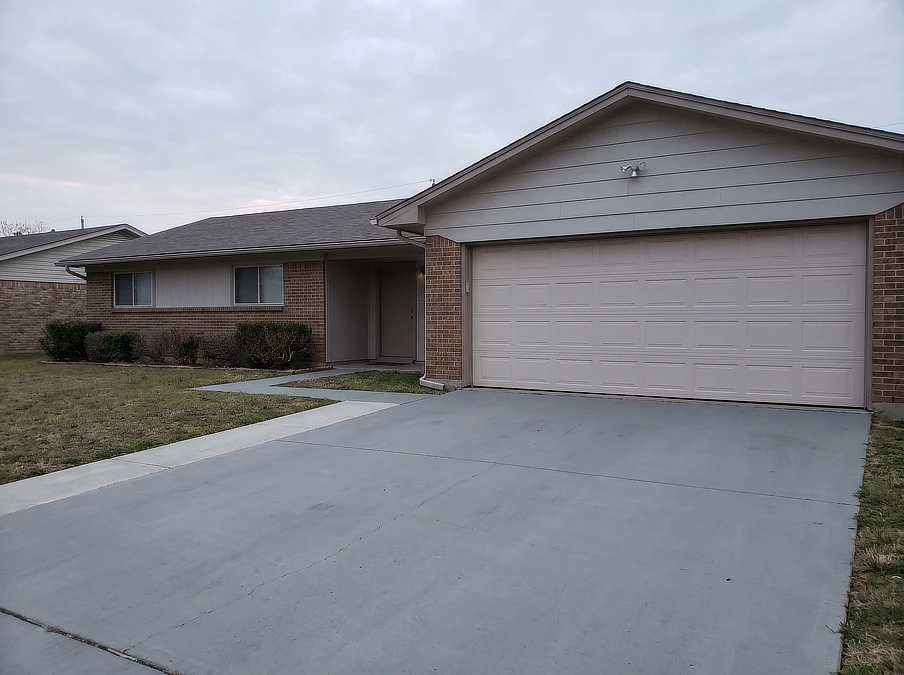
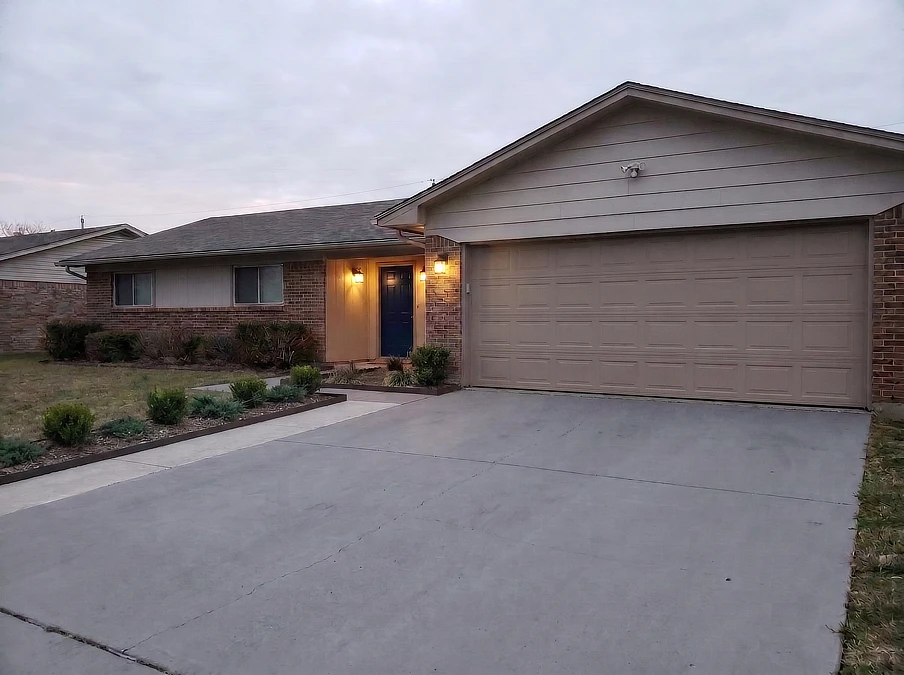
In our concept, we keep the same house, the same driveway and the same garage in the same position, and the existing walkway stays exactly where it is. We don’t add any new paving.
The only things we change are the entry cues described above, and we apply them to the entry route instead of spreading them across the whole front.
The comparison is there to show whether giving the entry route priority can redirect the eye on its own. If it can, you have a place to start that doesn’t involve tearing anything out. What it can’t tell you is whether the same changes would look the same on your slope, in your light or in your winter.
Where This Becomes a Professional Question, and Where to Start
Some of what turns up in these three reads isn’t a design question at all. Grading, drainage, where water goes after it leaves a new surface, how a route will be cleared in snow, and how paving is built to last are all property-specific and belong with qualified local professionals who can assess the actual site.
The same goes for any route that needs to work for someone with limited mobility. This guide can help you describe the problem clearly, but someone needs to see the site to judge it.
If you only try one of these, make it the car door read. The curb view is the one people photograph, and the view from your own window is too familiar to tell you much. Stand where a visitor actually steps out, look straight ahead, and notice what the house shows you first.
You may already know the answer once you’re standing there. If not, go back to the three situations above, pick the one that matches what you saw, and start there.
Related Guides
Something Feels Unresolved, But You Can’t Name It?
The free 10-Minute Curb Story Check helps you identify what deserves to stay, what controls the first impression, and the first priority worth your attention.