
Guides → Garage, Façade & Focal Balance
When the Garage Is the First Thing You See
Last reviewed September 10, 2026 · AI concept imagery · About 6 minutes read
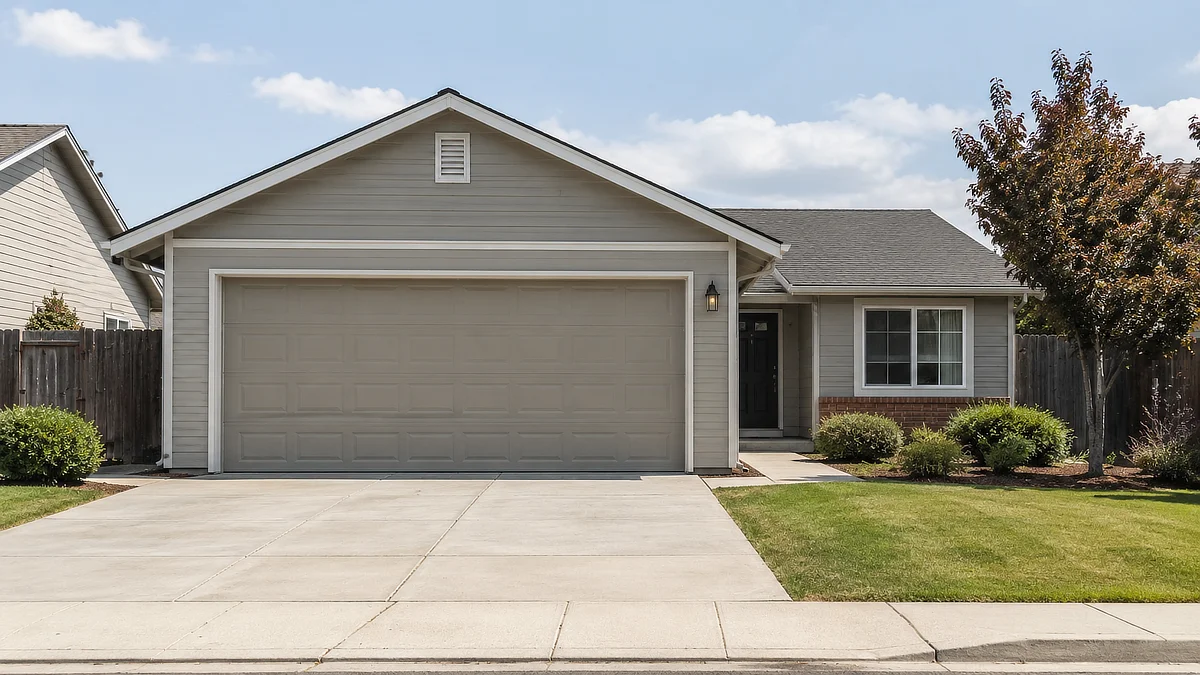
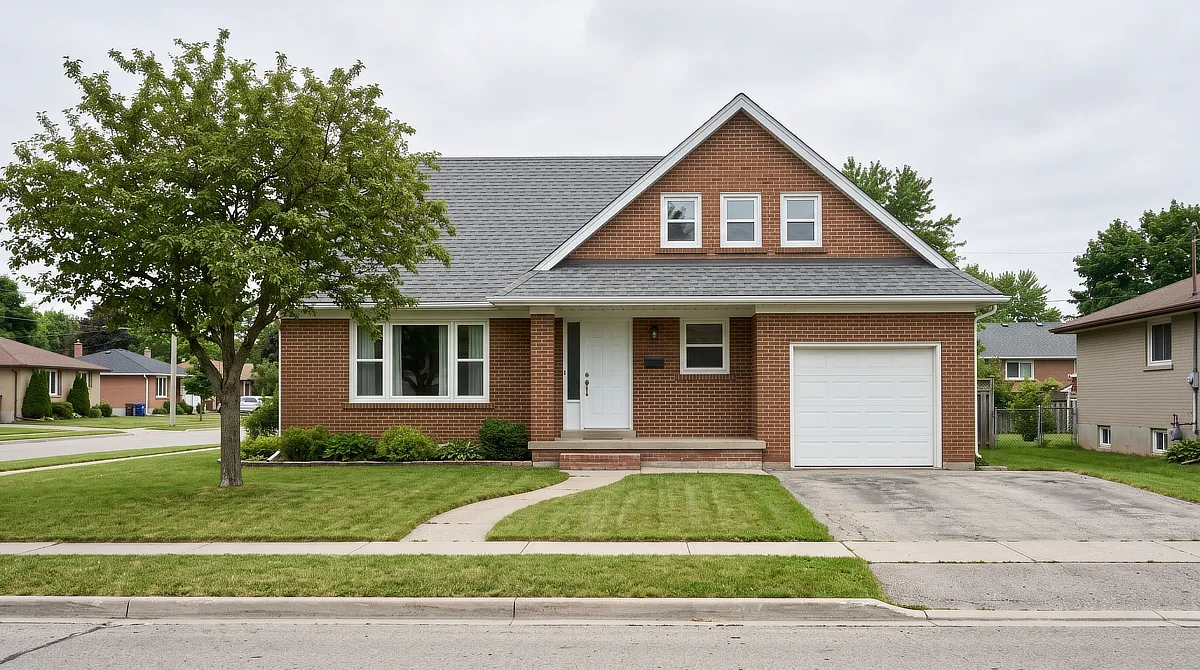
AI concept visualization for inspiration.
You might notice it at odd moments: pulling into the driveway after work, standing at the mailbox while the car warms up, or seeing a photo of your street and realizing that from the curb, your house is mostly garage door.
It’s a familiar shape for a lot of houses. The garage sits at the front, close to the street, and it takes up a large part of the view. The garage belongs there, so the useful question is why the front reads the way it does, and whether the garage is really the reason.
That’s worth a closer look, because the answer changes what you’d do first.
What You Are Actually Noticing from the Curb
It helps to look at your house from two places, because they can give you different impressions.
The first is the street view, from a car or the sidewalk, at a distance and usually in motion. At that distance, details recede. Larger shapes and stronger contrasts become more prominent, and one surface usually leads. If the garage door is the largest single plane on the front and it sits closest to the street, it tends to lead that view.
The second is the walking view, from the driveway or the path, where the house is closer and more complete. Here the entrance usually reappears, the planting registers, the details become visible, and the house makes more sense.
If the first view frustrates you and the second one reassures you, that gap is useful information. It suggests the problem is in how the front reads from a distance, and that what you already have may be fine.
You may also have stopped noticing it over time, and only notice now because someone said something, or because you saw the house in a photo. That’s normal.
Why the Garage Takes Over the First Impression
Three ordinary things can put the garage at the top of the visual order.
Size. A double garage door is often the largest uninterrupted surface on the house. Little else on the front is that big and that plain, so the eye tends to settle there first.
Position. On many houses, the garage sits forward of the main wall, closer to the street, and the driveway runs straight at it, so your eye follows the same path as the car.
Continuity. A large garage door can read as one continuous surface rather than as part of the façade, especially when its size, position or contrast separates it from the materials and openings around it.
Sometimes the garage dominates because of those physical facts, and it really is the loudest element on the front. Sometimes it dominates because nothing else on the front is asking for attention. Often it’s a mix of the two.
It’s worth working out which situation you’re in before deciding what to change, because the two lead in different directions. If the entrance is simply quiet, the front can rebalance without touching the garage at all.
If the garage is really oversized or pushed well forward, giving the entrance more presence helps, but it may not be enough on its own.
Either way, there’s nothing wrong with the house. The front is simply drawing the eye in an order you wouldn’t choose.
What Deserves to Stay
Before anything else, name what’s staying. Some of it is fixed and some of it you’d keep by choice, and both matter.
Fixed for now. Brick, stone, or siding that’s staying. Roof colour and the main roofline. Window and garage locations. The driveway where it is. These are what make a direction specific to your house.
Worth protecting. A mature tree at the front. A modest porch that already works. A material that has aged well. The simple proportions of the house, if it’s a house that was meant to be simple. Something doesn’t have to be fashionable to be worth keeping, so look at these before you decide anything else.
The garage. It’s easy to blame the garage, but it does a lot of work. It stores the car, the bikes, the bins, the snow shovel and the things that would otherwise live on the porch, so any direction that makes it less usable won’t hold up in real life. In our concepts, the garage stays a working garage, and the driveway stays a working driveway.
What Is Probably Controlling the Visual Hierarchy
If the front feels unbalanced, one or more of these is usually doing it.
Colour and contrast weight. A garage door that contrasts sharply with the wall around it can read more prominently, even when its size doesn’t change. This can be a major factor and it’s easy to misjudge, because up close the difference looks smaller than it does from the street.
Horizontal pull. A wide garage, a wide driveway and a low roofline can all pull the eye sideways. When everything on the front runs horizontally, a house can feel stretched even when its proportions are fine.
Height near the entrance. Look at whether anything near your front door has real height, such as planting with some vertical presence, a taller light fixture or a column. If there’s nothing like that, the entrance can look flat even when it’s easy to see.
After dark. If there’s a bright fixture over the garage and one dim bulb at the entrance, the garage will likely draw the eye first. The hierarchy after dark can be more lopsided than during the day, and it’s easy to leave unchecked.
Source House and Concept Direction
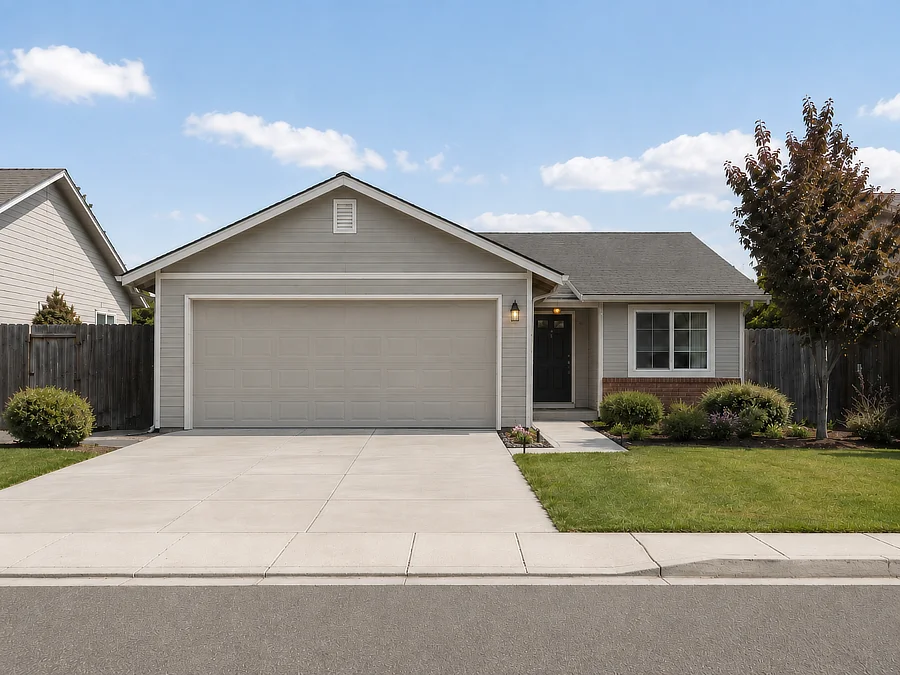
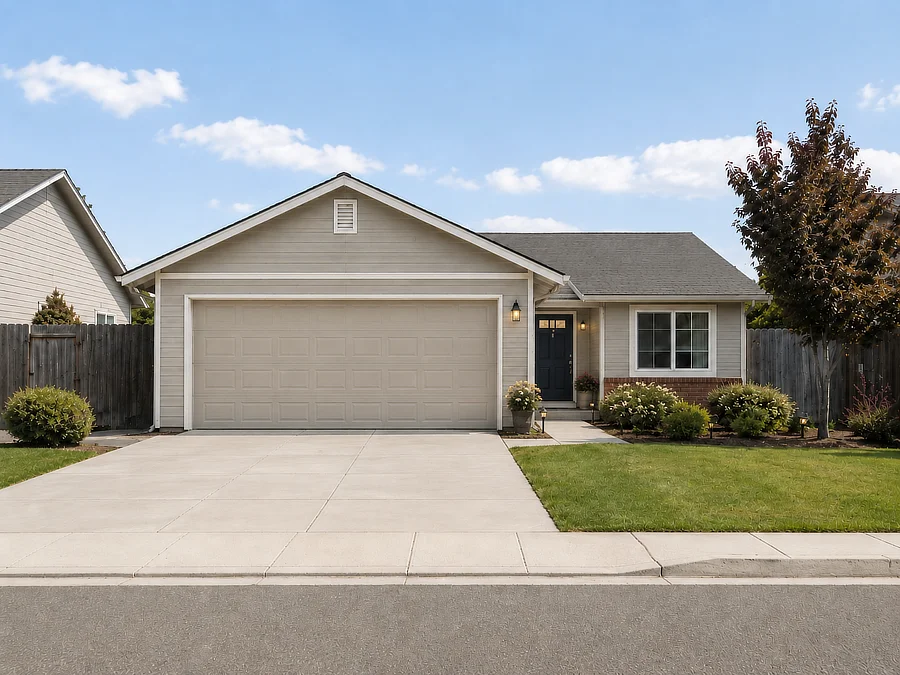
A comparison helps here, because this is hard to describe in words. Two fronts can have the same garage, the same driveway and the same roofline, and read differently depending on where the contrast sits and whether anything near the entrance has height.
When we build one of these, we keep the garage the same size and in the same place, and the driveway still works. What we change is the order in which you notice things. If we can’t show that without moving an opening or rebuilding the front, we haven’t solved the problem, so we don’t publish that version.
Three Decisions Worth Thinking About First
These aren’t a plan, just three questions worth answering before you spend anything.
- Decide whether the emphasis problem sits with the garage, the entrance or both. Stand at the curb and ask what you’d notice if the garage door were closer in colour to the wall behind it. If the front would feel more settled, that’s a clue that contrast and emphasis are part of the problem, and reducing contrast may be one of the less disruptive places to look.
If the front would still feel like a garage with a house attached, the entrance needs more presence of its own, and the garage colour alone won’t be enough. The trade-off in the first case is that a quieter garage door can also make a plain front feel plainer, which is exactly why the second question follows. - Give the entrance something worth looking at. Size usually matters less here than presence: height near the door, a door colour that’s clearly different from everything else on the front, or lighting that reads at night. The trade-off is that it’s easy to add three things and end up with a front that’s busy instead of balanced.
- Make the route to the front door easier to read. The driveway still has its job to do, so the aim is simply a route people can follow. On many houses the walkway is narrow, poorly edged, or joins the driveway in a way that leaves a visitor guessing. A route that’s visible and obvious can do real work here, because it gives the eye somewhere else to go.
The trade-off is that route changes are less photogenic than a new door colour and often feel like less of a change than they actually are.
What we wouldn’t start with if the garage is already the loudest element: decorative hardware on the garage door. It can make the largest surface on the front more detailed and more noticeable, which works against the goal of making it less dominant.
Where Local Input Matters
A few of the things above need a qualified local professional.
Exterior lighting is the clearest one. If you’re moving, adding or rewiring an exterior fixture, have a qualified local electrician evaluate the work and the requirements where you live.
Planting near a driveway is the other. Height near the entrance is a design idea, but which plants hold that height in your climate, how they behave against salt and snow storage, and whether they block sightlines when you back out are local questions with local answers.
Curb Vibes concepts are editorial. They show one possible direction for a fictional house. They aren’t plans, specifications or an assessment of what’s appropriate for your property.
If You Only Look at One Thing This Week
Take one photo of the front of your house from where a car would stop, in daylight, straight on. Then take the same photo after dark. Don’t change anything and don’t plan anything. Just compare which element your eye lands on first in each one.
If it’s the same element both times, you have a strong clue. If it changes between day and night, lighting may be part of the answer, and it’s worth understanding before you decide what to do.
Related Guides
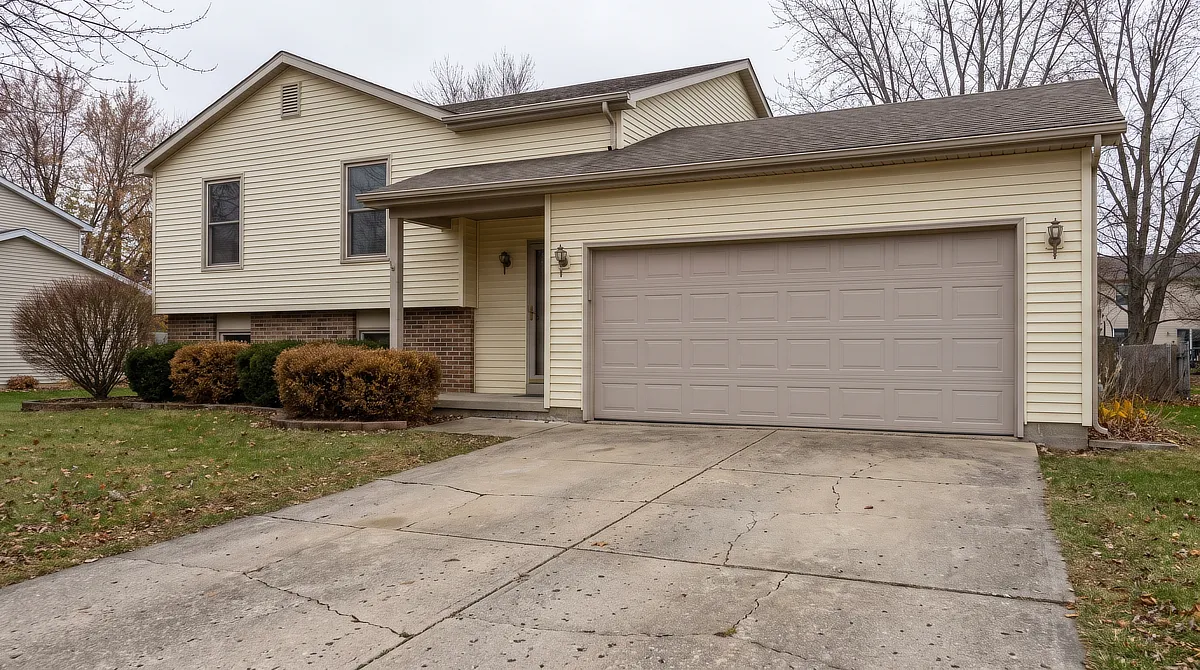
Something Feels Unresolved, But You Can’t Name It?
The free 10-Minute Curb Story Check helps you identify what deserves to stay, what controls the first impression, and the first priority worth your attention.